Why I’d Sell Motorcycles But Not Motorcycling
People decide to ride motorcycles for a lot of reasons.
Some are encouraged by friends. “Come ride with us, it’ll be a blast.”
Some are joining a brand. Take the couple who bought a new Harley and his and hers Harley-branded leathers. They became a part of the Harley family, occasionally dropping into their dealer to check out new gear, drink coffee, see the new bikes and talk Harley.
Some are joining the crotch rocket set. “I want full leathers and a helmet that matches my motorcycle.”
Some are creating an identity, like the slight man who roared onto our lot on his Sportster Iron 883 fitted with a Bassani Road Rage Mega Power (mega-loud, mega make-a-statement) upgraded exhaust. He wore a scary skull face mask. He was an auditor and worked for the government. But when he donned his motorcycle gear, I presume, he felt different.
During the first morning of an advanced riding course I met two quite different Harley riders. (Just for the record, the fact that my anecdotes include Harley riders is just coincidental.) One was a lady riding a full-sized Harley. We rode patterns together, at first one after the other and then the more advanced exercise of having us both in the same pattern at the same time. She was an excellent rider yet she was there to improve her skills even further.
Another was a new rider with a brand new shiny burnt orange $40,000 Harley. He left during the first hour stating that this wasn’t what he had expected. I suspect he was afraid of dropping his new motorcycle. I also suspect he needed training to learn how not to.
Whatever. People ride for all sorts of reasons. They can wear whatever they want, and do whatever they want. Whether the Harley couple or the face-mask guy were interested in becoming great riders I have no way of knowing. The woman taking the course seemed to have chosen to be a great rider, and the guy who left the course had, at least, chosen: Not today.

Riding or riffing you need to rock it
I do not care why anyone decides to ride. My contention is that whatever the reason, a commitment to developing great riding skills isn’t just for those who love to play around in parking lots. It is essential for every rider. It is the price of entry. You’d never decide to be a rock star and then never practice the guitar. You’d know, intuitively, that average-Joe playing would not make you a star. Without rock-star guitar playing skills you’d never have a chance. And how do you get rock-star playing skills—rock-star practice.
But, people decide to be motorcyclists every day without deciding to be a rock-star rider. Joe average riding skills is enough for them. The thing is, not getting a record deal or being booed off the stage may be disappointing or embarrassing, but being a poor rider can have much more dire consequences—toe-tag consequences. So what’s up with that average is okay thinking?
Wanting to ride is not equivalent to wanting to be a great rider
I don’t think anyone decides to be a poor rider. It might come down to their original motivation to ride. If they are riding to be a part of a group, to go riding with friends, to join a brand and be cool (no judgment), practice might just not be their thing. They don’t have the self-directed motivation to do what is necessary to develop the necessary skills. They might enjoy going out with their buddies for a ride, but never think of riding by themselves or taking an advanced riding skills course.
This could be explained by Self-Determination Theory (Deci & Ryan). There is a significant difference between autonomous, self-directed motivation (I want to do this/This matters to me) and controlled motivation (peer pressure, approval, obligation, reward, expectations of others, etc.) Research, especially in sports, has found that personally wanting something (to be a great rider, to be a rock star) is associated with the sustained, purposeful practice that will develop superior skills. Conversely, controlled or extrinsic motivation doesn’t normally facilitate this same kind of practice.
Furthermore, SDT explains that confidence naturally grows when choice is autonomous and one experiences increasing mastery.
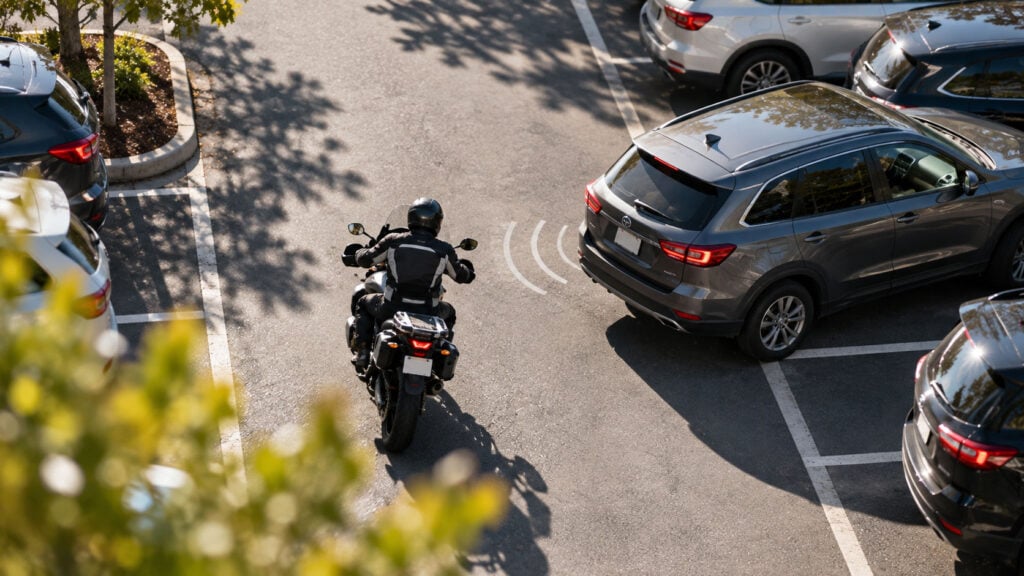
When a driver darted out of a shopping centre parking lot, saw me, and stopped dead in front of me, I’d like to tell you my ABS did its job, but I can’t. I saw the car approaching, slowed down, covered my controls, and watched closely. When it darted out it wasn’t a surprise but an expectation. As the car rocked back on its suspension, I knew I didn’t need full emergency braking. I released the brakes and counter-steered around it. The ABS never needed to deploy.
Advanced rider training—I had taken a two-week course with the police—had taught me to anticipate, react quickly, and act without hesitation or panic under stress. I continued along as if nothing had happened. My pulse wasn’t even racing.
You don’t necessarily end up where you start
That said, regardless of the initial motivation to start motorcycling, there is no absolute determinant as to what choices you will ultimately make. Plans to become a great rider can be waylaid by family and work commitments and joining your friends to ride can stir an intrinsic interest to become a great rider that was not there when you started. For me, though, I really like it when a new rider sees the big picture: the great rides, the tight curves, and the hard work it takes to become a great rider.
Any way you cut it, though, a mediocre guitarist trying to become a rock star will encounter resistance everywhere: bands won’t hire him, record companies won’t be interested, and audiences will not be impressed—if he by chance makes it that far. The world will keep telling him, You’re not good enough.
Not so much with motorcycling. A mediocre rider doesn’t necessarily get that message. They can get their licence, buy an expensive motorcycle, ride thousands of kilometres, join riding groups, go on tours, ride for years without having an accident, and have their neighbours drop over to ooh and aah over their freshly polished steed as it sits in their driveway. In fact, all those accident-free kilometres may convince them that they’re a pretty good rider. And being the centre of attention and showing off their bike can make it fun and give them the feeling of being the expert—even while they remain a poor rider.
But when something happens that requires a skill they have never developed, if it isn’t disastrous, it could very well scare them into a tizzy.
Training while stressed makes you better. Who knew?
Tizzy? Riders that have chosen to become great riders will continuously up the ante to test themselves and stretch their ability to cope under fire, to wit, situations that might put many riders into a tizzy. To be able to handle the worst of what you may be faced with out on the road, you must not only be able to perform the skills, you must be able to perform them immediately, under stress, in a dynamic real-world environment. This can be trained. (Remember when I was faced with the car that had stopped dead in front of me as it exited the shopping centre?)
Advanced motorcycle training includes exercises that can help you improve this. It falls under the heading of Stress Inoculation Training (SIT) studied initially by Psychologist Donald Meichenbaum. Basically, you up the stress gradually so that the stress eventually loses its novelty and you can perform, not despite the stress, but because it no longer has the same effect on you.
But, those riders that are just along for the ride, and not active participants in their own skills development will not be inclined to push themselves past their comfort zone—to take advanced courses, to undergo SIT. They will bathe in the comfort of complacency or oblivion and may never become good riders.
Which is the reason I never sell motorcycling. The decision to become a motorcyclist does not inherently include the decision to become a great rider. My contention is that it should. Choosing to ride should include the decision to become the best rider possible, because the down side can be severe. Very severe.
If someone chooses to ride but does not also choose to become a great rider, then I want no part in it. Their safety is their decision and I am not going to be involved in convincing them to try to become a rock star when I know darn well they are not going to practice.
But if they do decide to become a rider and commit to becoming the best rider they can, I will welcome them with open arms and do everything in my power to help them along the way.
Get out there, be visible, stay safe, and keep learning.
– John Lewis

John is a passionate moto-traveller and motorcycle enthusiast who enjoys sharing stories that inform, inspire, and entertain. Specialising in motorcycle touring, safety, travel, or just about anything motorcycle-related, John’s insights, travels, and experiences have been featured in national magazines such as Motorcycle Mojo and The Motorcycle Times, as well as on various blogs and websites. When he is not riding or writing, he works as the service manager at a boutique motorcycle shop where he’s always ready to share a story or helpful tip.