
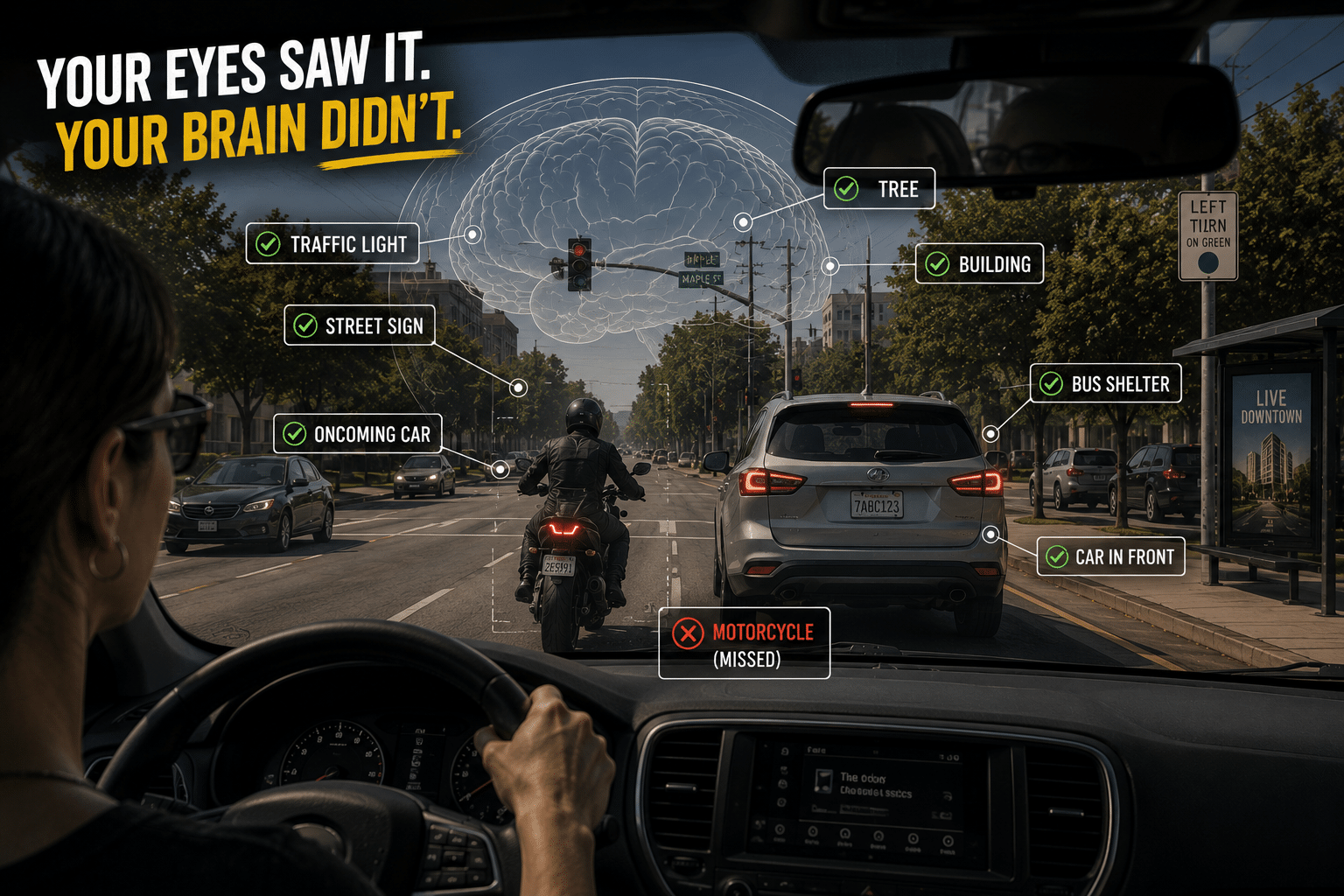
It’s nothing! You will NEVER hear it because nobody ever says it. The UK acronym is SMIDSY, meaning SORRY MATE, I DIDN’T SEE YOU. Something you might hear after a bloke cuts you off or, heaven forbid, hits you. It is not and has never been: SMIDHY. Drivers never say: Sorry mate, I didn’t hear you. Which makes me wonder why riders still believe that LOUD PIPES SAVE LIVES.
When I came back to riding, I wanted to optimize for safety, so I went with the odds: I increased my conspicuity. Of course, my headlight is always on, mandatory in Canada for all bikes built since 1970, and I added additional running lights on the front of my bike and AdMore’s Light Bar on the back, very effective to let those following me know when I am slowing down. Going back to The Hurt Report (1981), and just about every motorcycle accident study since, the evidence is clear. Cars hit motorcycles because they don’t see them. They might be looking right at us and still not see us (inattentional blindness), lose us amongst competing lights or behind other vehicles, or be unable to see us because we’re hidden behind urban street furniture (construction signs, bus shelters, utility poles, etc.). There are many reasons we are not seen. But I don’t recall any study ever mentioning motorcycle loudness as a significant factor.
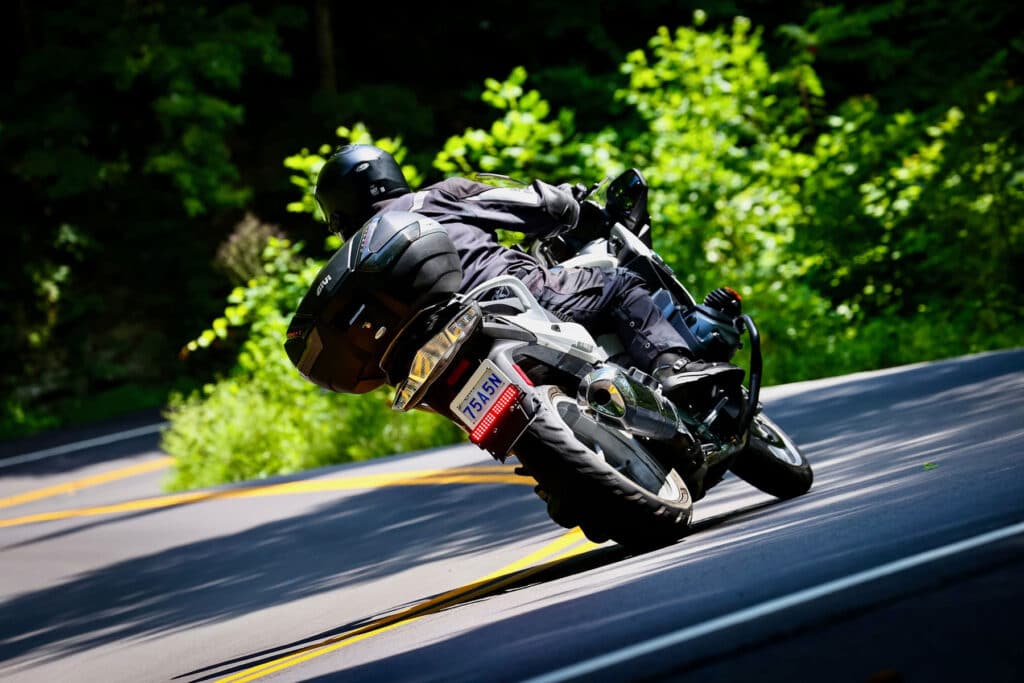
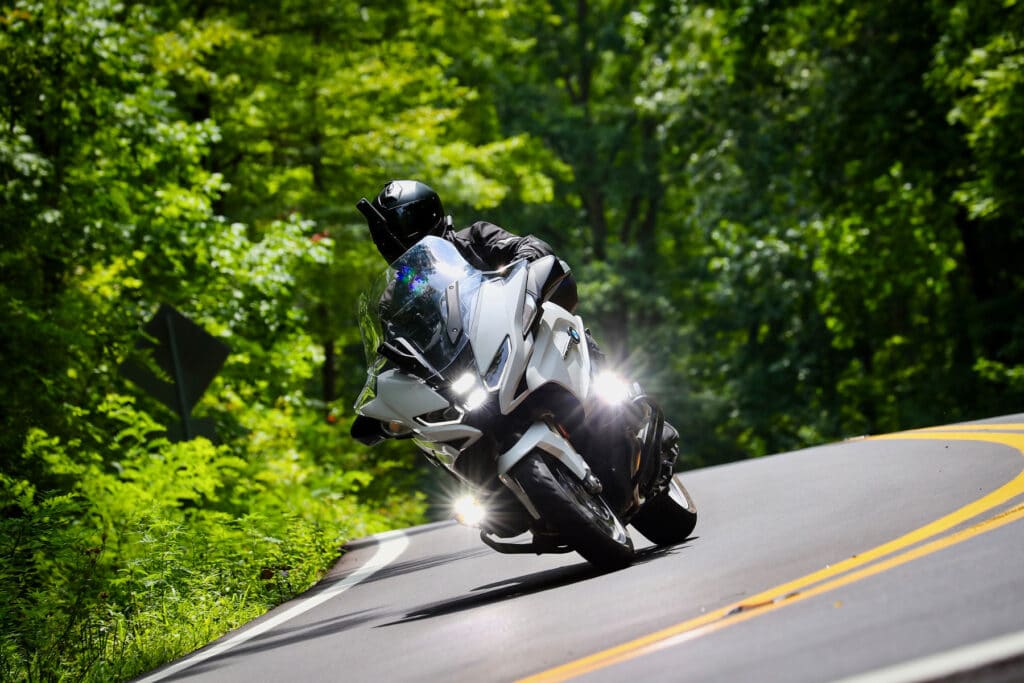
Now, don’t get me wrong. The rumbling of a big V-twin sounds really cool. It says I’m here in a way that my yellow high-viz “Big Bird” jacket just can’t match. But there are reasons why it doesn’t work.
Exhaust pipes point backwards, usually away from the left-turning vehicle you desperately need to hear you. And even if they do hear you, they very likely will not be able to tell where you are, anyway. Exhaust systems produce a low-frequency rumble. Unfortunately, the human ear is very poor at pinpointing the location of low-frequency sounds, so you’re still out of luck.
And sound isn’t instant. By the time a driver actually hears you, figures out what the noise is, and works out where it’s coming from, the moment when they needed that information has probably already passed—making it too late for you.
Modern cars don’t help your cause. Everything about them, as if conspiratorially, works to keep noise out: the cabin insulation, the tightly sealed windows, the hum of the air conditioning, and the music from the radio. Drivers enjoy their own protected (and possibly too quiet) world. What sounds thunderous to you as you sit on your motorcycle may not even register on the driver isolated inside their cage.
The result? After decades of motorcycle safety research, nobody has shown a clear link between louder exhausts and fewer crashes. That’s why I went the conspicuity route.
That’s not to say that noise isn’t an effective tool for safety. It is. But instead of the continuous roar of an unlocatable rumble, a high-volume horn used strategically will do a lot more to grab someone’s attention. And while we’re talking about horns, why do they give big trucks—you know the ones, you couldn’t miss them if you tried—fog horns suitable for an oil tanker—hARROOOOOMmm—and little Fiats and motorcycles the horn equivalent of a cartoon Roadrunner—meep, meep? (Shameful plug: Check out The DENALI™ SoundBomb. It is designed for those who want to be heard.)
But I’ve learned that it is not just about being seen (extra lighting, wearing high-viz clothing) or being heard (having an upgraded horn). Riders on loud bikes (or with loud horns) or wearing high-viz gear get hit all the time. Even when you should be clearly visible, there are a myriad of factors that can impair a driver’s vision or hijack their attention. We need a multi-tiered approach.
The last tier is road strategy, critically important because despite what we do, drivers will still not see us, even if we’re bright yellow, lit up with extra lights, or sound like a veritable freight train. Drivers will misjudge how far away we are and how fast we’re going. We know this, and we must plan for it. But that is the subject for a future post.
In the meantime, ride safe and be seen out there!
Reference of Links Used in This Article
Running lights: https://admorelighting.com/product-category/denali-electronics/denali-led-lighting/premium-series/
AdMore’s Light Bar: https://admorelighting.com/product-category/admore-lighting/light-bars/
DENALI™ SoundBomb: https://admorelighting.com/product-category/denali-electronics/denali-soundbomb-horns/
– John Lewis

John is a passionate moto-traveller and motorcycle enthusiast who enjoys sharing stories that inform, inspire, and entertain. Specialising in motorcycle touring, safety, travel, or just about anything motorcycle-related, John’s insights, travels, and experiences have been featured in national magazines such as Motorcycle Mojo and The Motorcycle Times, as well as on various blogs and websites. When he is not riding or writing, he works as the service manager at a boutique motorcycle shop where he’s always ready to share a story or helpful tip.