How self-awareness takes you to the next level
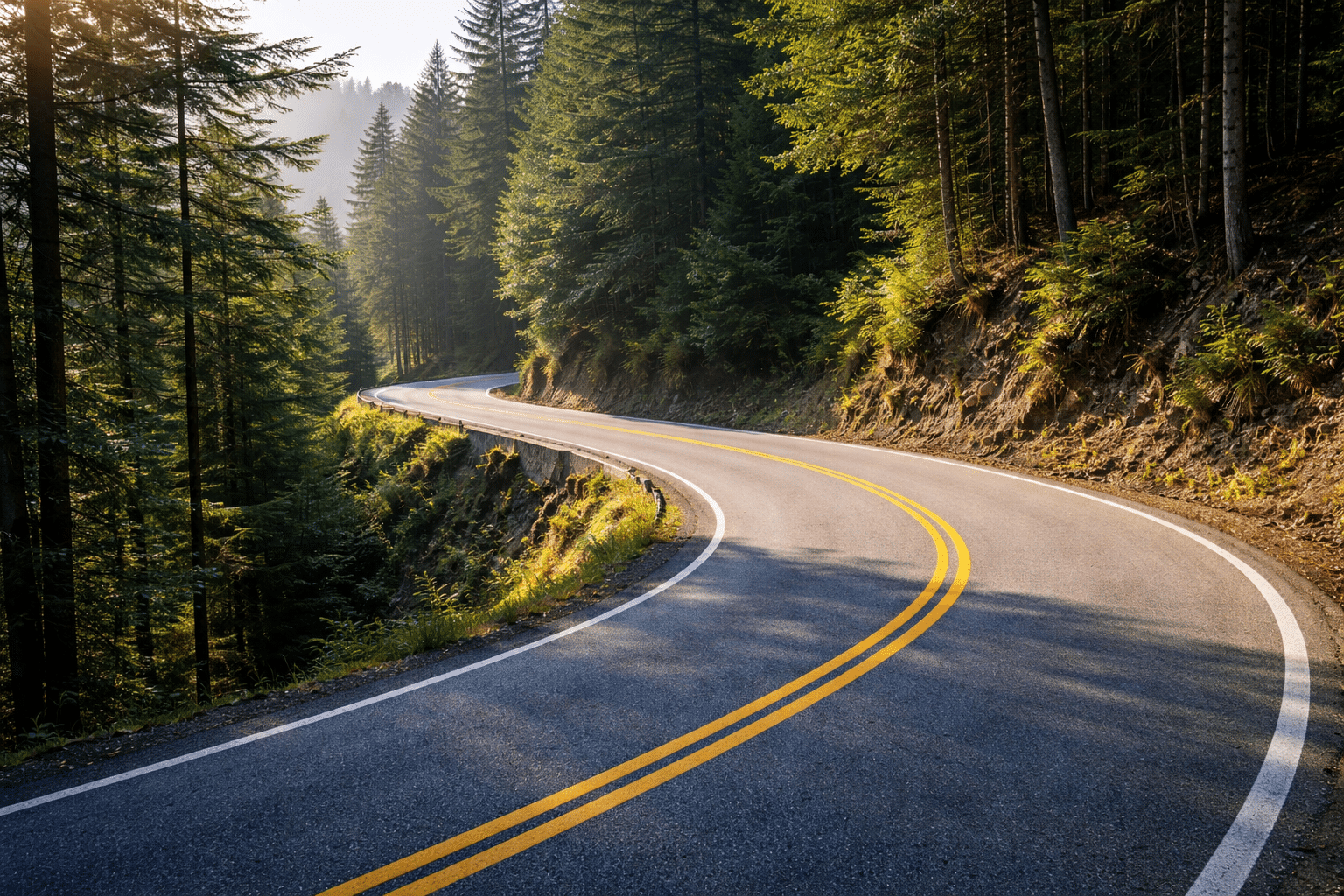
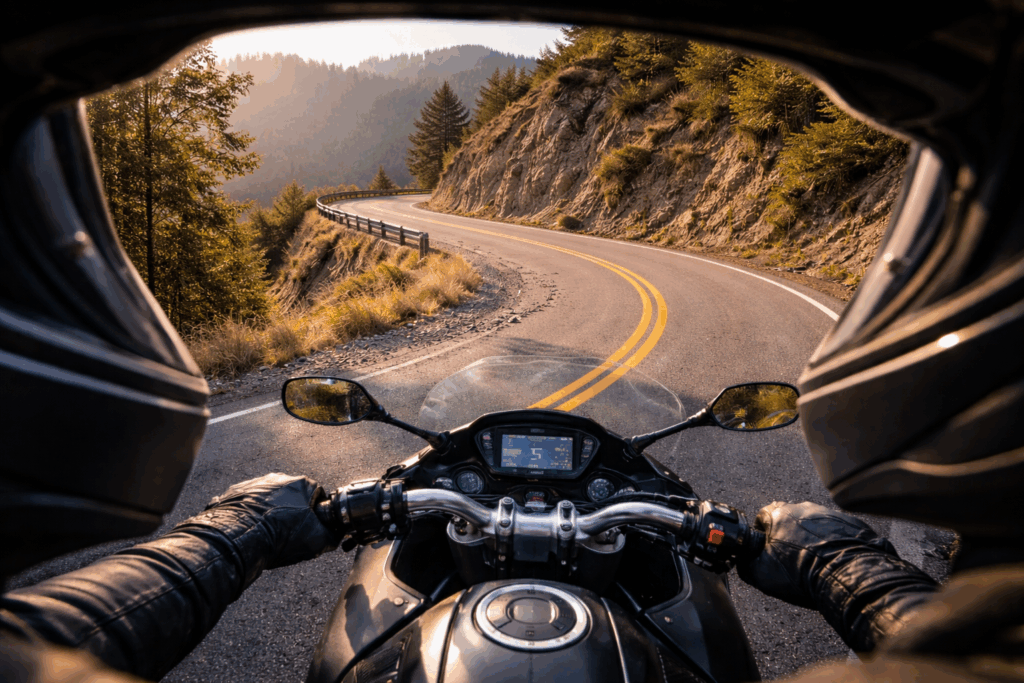
Clear, slightly cool, dry pavement, not much traffic; it was a perfect morning for riding. The road in front of me wound uphill into a tight right-hand turn. There was no shoulder, and on the inside edge the pavement ended and the ground dropped away into a steep wooded embankment that would not be forgiving if you missed your line. No worries. It wasn’t a hard corner, but it was a bit of a technical one: narrow lane, greater than ninety degrees, uphill, and high consequence if you missed it. I planned my speed, and my line. Then…
Two big cruisers ahead of me slowed. Too much. The second rider went off the road first. He saw the ravine. He saw the edge of the road. He got scared, fixated on it, then proceeded to ride his nine hundred and fifty-pound cruiser right over the edge. I’d seen it before. Hell, I’d done it myself.
Before anyone could do anything, the lead rider instinctively turned his head to see what happened—then steered his bike and his wife into the same gully. Two bikes down, same riding error. They rode where they looked.
Same Road, Same Conditions, Different Outcome
Nothing about the environment caused the crash. The pavement was dry. The visibility was good. They were controlling their own pace. The conditions were stacked in their favour. So what happened?
I don’t tell this story to judge them. I tell it because I understand exactly what happened. I’ve done versions of the same thing myself—just with better luck and far less dramatic consequences.
Learning the Machine Is the Easy Part
Most rider training quite rightly begins with the mechanics. Clutch. Throttle. Brakes. Shifting. Balance. You have to learn how to operate the machine before anything else matters. Beginner licensing programs spend most of their time on these fundamentals, with a smaller portion devoted to street strategy and hazard awareness. That makes sense. New riders already have a lot on their plates.
But here’s something that often gets lost in the process.
It doesn’t take very long to learn the basic mechanical operation of a motorcycle.
You can become reasonably competent with clutch, throttle, and brakes in a surprisingly short time. Advanced braking and precision control take longer, of course, but basic operation comes quickly. What takes much longer is learning how to think on a motorcycle.
That’s where things get interesting.
Thinking Better, Not Riding Harder
When I started looking more closely at the UK police riding philosophy—particularly through Motorcycle Roadcraft: The Police Rider’s Handbook—something jumped out at me almost immediately. It isn’t just about riding skills. It’s about continuous evaluation and adaptation.
Not riding harder.
Not riding faster.
Thinking better.
The idea is deceptively simple. You are constantly scanning. Constantly evaluating. Constantly adjusting. Speed. Road position. Gear selection. Following distance. Escape routes. All of it changes moment by moment based on what’s developing ahead.
It isn’t reactive. It’s proactive.
You don’t wait until something becomes a problem. You see it forming and quietly reposition yourself long before it matters. Someone up ahead is turning left? You already know cars will start jockeying behind them. So you ease off early, change your lane position, select a gear that gives you options, and build space.
No drama. No heroics. Just calm, continuous refinement.
That’s the real skill.
Why Beginners Are Overloaded
Here’s what makes early riding so dangerous—and most people don’t realize it.
New riders are simultaneously trying to learn motorcycle controls, traffic rules, driver behaviour, road strategy, hazard recognition, prediction, and positioning. All at once.
That’s a massive cognitive load.
They’re figuring out how to shift smoothly while also trying to understand why that car drifted toward the centre line, while simultaneously wondering whether they’re in the right gear, while attempting to remember what they were taught about lane positioning.
No wonder beginners crash.
They’re overloaded—and they don’t even know it.
That’s why I sometimes joke that new riders should have to drive a car for a year before riding a motorcycle on the road. Because, if they have no on-road experience—even if in a car—they need time to absorb driver psychology: impatience, distraction, last-second decisions. Those patterns matter, and failing to understand them when they’re riding a bike can be knee-scraping—or worse. Without that experience, they’re trying to solve too many puzzles at once.
The Missing Skill: Self-Awareness
Even beyond strategy, there’s another layer that doesn’t show up much in manuals.
Self-awareness.
This is where riding becomes personal.
Am I willing to take responsibility for whatever happens to me on a motorcycle?
Are my skills where they should be?
Do I regularly practice key skills?
Do I stay within my ability?
Do I get angry when I am riding?
Have I actually kept learning, or am I coasting on my licensing course?
This is the difference between experience and wisdom.
Confidence without competence is dangerous.
Skill without judgment is lethal.
Returning riders are especially vulnerable. They remember being good. They forget that reflexes dull, bikes get heavier, traffic gets worse, and muscle memory fades.
“Heh—it’s just like riding a bicycle.”
No. It isn’t.
Kaizen on Two Wheels
There’s a Japanese concept called Kaizen—continuous, never-ending improvement. It fits motorcycling perfectly.
You don’t just ride. You review.
What went right?
What went wrong?
What almost went wrong?
And here’s the crucial part: you don’t play the blame game.
Not “the road made me crash.”
Not “that rock steered me off.”
Not “that driver’s an idiot.”
You ask: What did I contribute to the situation?
Because if you don’t take responsibility for your part—even when someone else is legally at fault—you won’t learn a thing.
I’ve heard riders explain crashes by saying the most outrageous things. If they’d just say: “I was an idiot and I took that corner way too fast,” then they might actually learn something that will help them next time.
Ask Me How I Know
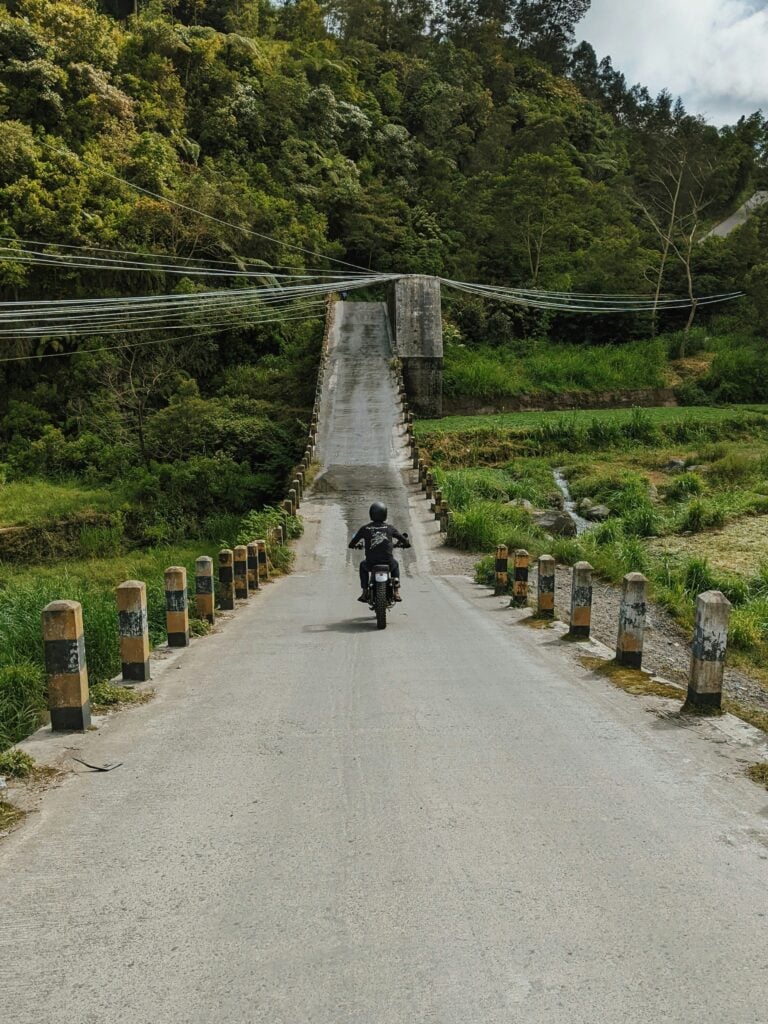
Ask me how I know about target fixation and going where you look.
I learned it the hard way.
Once, during an advanced rider training course, I was doing figure eights on a sloped cul-de-sac. Everything was going fine until I noticed a rosebush in a rock garden. I stared at it. Next thing I knew, that rosebush and my backside had become close acquaintances.
Another time, I was making an uphill left turn into a narrow country lane. The turn was more than ninety degrees. The road climbed. There was a grassy ditch waiting if you missed your line.
Guess where I looked.
Straight at the edge of the road. I ended up in the ditch.
No serious damage. Just embarrassment and a bruised ego. But the mechanism was identical to the cruiser crash: attention drift, visual fixation, loss of control.
Same human wiring. Different outcomes.
I don’t make the same mistake twice. I make it three or four times just to be sure.
Eventually, though, the lesson stuck: you go where you look. And once that finally burned itself into my nervous system, everything changed.
Talent Isn’t the Difference
Over the years, I’ve seen all kinds of riders in training environments.
Some arrive assuming they’ll probably be among the better riders. Reality introduces itself. A few leave early, usually claiming they don’t need the course. Many stay quietly humbled and start recalibrating. Some light up completely, suddenly realizing how much more their bike—and they—are capable of. They leave buzzing, already talking about taking the course again next year.
Personally, I love seeing the converts.
But there’s also a large group who arrive simply wanting to learn. They don’t think they’re better than they are. They just want to leave safer and more skilled. No ego attached. These riders tend to make steady, quiet progress, and they’re often a joy to watch.
None of this is about talent.
It’s about mindset.
Some people evaluate themselves critically and keep learning. They become riders with twenty years of experience. Some learn what they need to get by and then repeat the same year twenty times. That’s not a character flaw. It’s just a different relationship with growth.
The Real Progression
What keeps us safe isn’t knowing how to shift better or taking prettier lines through corners. It’s continuous observation, constant evaluation, early adaptation, honest self-assessment, and a willingness to keep learning.
Motor skills allow you to ride your bike.
Observation, evaluation, and adaptation allow you to handle the road.
And self-awareness, tempered with humility, allows you to grow as a rider for years to come.
That’s the progression.
First you learn to operate the motorcycle.
Then you learn to manage traffic.
Then—if you’re paying attention—you learn to manage yourself.
That’s where real riding begins.
The Lesson
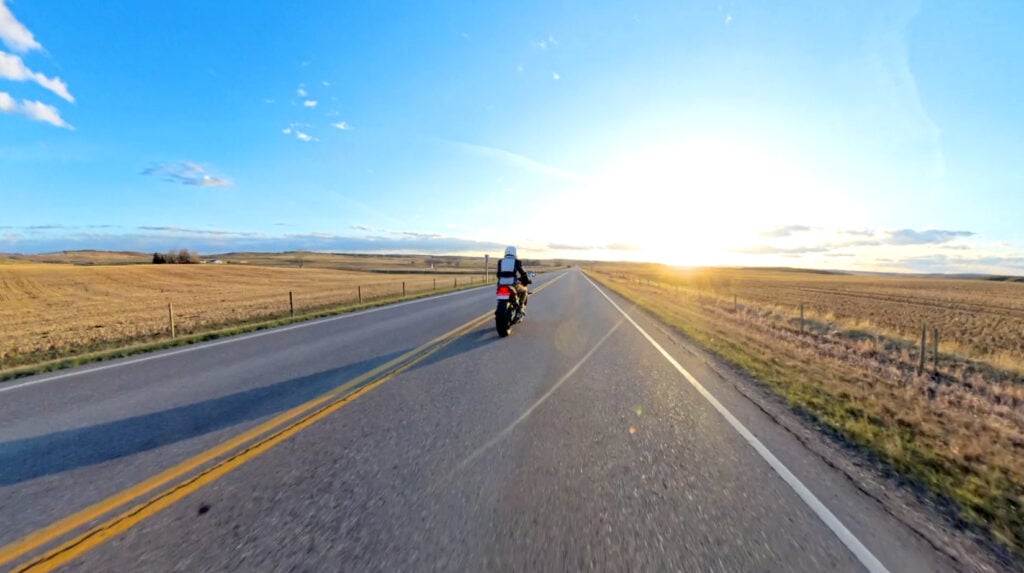
Motorcycling isn’t about perfection. It’s about awareness. It’s about catching yourself when your attention wanders. It’s about noticing when your confidence gets ahead of your ability. It’s about quietly adjusting speed, position, and strategy long before trouble arrives.
And it’s about owning your mistakes when something happens out there—and it will—because that’s where the learning lives.
On that day, everything was working in those riders’ favour.
Except the most important thing.
Their thinking.
And that’s the lesson.
It wasn’t weather.
It wasn’t traction.
It wasn’t bad luck.
It was a lack of self-awareness—an inability to recognize their own limits and adapt when faced with a threat.
They were riding bikes beyond their ability on a road more technical than they could handle. They were intermediate skiers on a double black diamond run—and they didn’t even know it.
I rode through that same corner moments later. Same pavement. Same light. Same geometry. The difference wasn’t skill.
It was awareness.
I knew my limits because I continually train.
I knew I could adapt if something changed.
I’d planned my speed.
I’d chosen my line.
I kept my eyes where I wanted to go.
Real mastery isn’t about control—it’s about self-awareness.
Ride safe. Keep your head in the game. And never stop learning.
– John Lewis

John is a passionate moto-traveller and motorcycle enthusiast who enjoys sharing stories that inform, inspire, and entertain. Specialising in motorcycle touring, safety, travel, or just about anything motorcycle-related, John’s insights, travels, and experiences have been featured in national magazines such as Motorcycle Mojo and The Motorcycle Times, as well as on various blogs and websites. When he is not riding or writing, he works as the service manager at a boutique motorcycle shop where he’s always ready to share a story or helpful tip.
One year I experienced the need to focus due to an equipment issue. I had needed to replace my rear tire, but my dealer was out of the make I had used for the last three tires. He could get one in, but not for at least a month, so he said he had a different brand that had fairly good reports. BIG mistake. The first time I encountered the problem was on a cold rainy day where I was turning right onto a road from a stop sign. I wasn’t gunning it, but in order to fit into the gap in traffic I did have to apply a fair amount of throttle. The back end tried to slip out from under me, I recovered nicely, and thought that maybe there had been some oil or such like on the road as I was close to the gutter. When these slips kept occurring, I realized it had to be the tire. It didn’t like wet conditions. And combine wet with cold, and things got REALLY interesting. As I was approaching another winter of riding (I live in the Vancouver area, so I get to ride year round, sorry-not sorry!) I decided that it was worth the money to replace the tire for the peace of mind. It probably took me a full year to regain my confidence in corners, but on the plus side, I got very good at recovering from any rear wheel skids!